Posts

Ho'oponopono and the Lesson of Dead Tomatoes

Image
I have some planting beds in my backyard, and can grow tomatoes and other delightful treats. The lettuce and basil this year have been wonderful so far too. Only I went away recently for a homeopathy meeting. During my few days' absence, our Arizona summer arrived with a vengeance. Seriously, you might leave one day with temperatures in the 80's, and return a couple of days later to 100+. It happens that suddenly here. The air shifts from inviting and warm at noon, to searing the skin from your face. Imagine you are a tomato plant, trapped in your spot . . . and the drip irrigation fails . Your human isn't there to know it, and the sun beats down full force too. You are toast in short order. So that is what greeted me when I returned. Dead, brown, sad tomato plants -- yet still bearing some tomatoes. It was eerie; it was as if with their dying gasp, the plants gave up their last red, shiny progeny. "Go forth, make seeds, let us be remembered," they might have been...

Ho'oponopono: Simplicity Accepts Us All

Image
"I wish I could make it more complicated for you, but I really cannot." ~Dr. Ihaleakala Hew Len I've often heard Dr. Hew Len say this to people, both in person and on teleseminar calls. A combination of laughter followed by silence usually results. Many of us just can't fathom how saying "I love you" or mentally thinking a so-called cleaning tool such as "ice blue" can do anything in the outer world of effects. Perhaps that is precisely the point -- it is beyond our human abilities to fathom. Indeed, one of the things many like about Ho'oponopono is its simplicity. It excludes no one, requires no particular dogma, and can be practiced in all situations. Health issues, family discord, financial challenges, and career or life purpose dilemmas are only a few possible applications. Soon after meeting Dr. Hew Len, I asked him about additional training beyond " Basic" Ho'oponopono . How he had developed his own understanding of it, ove...

Self-Identity Through Ho'oponopono: The Gift in Being Ourselves

Image
"This is the true joy in life -- the being used for a purpose recognized by yourself as a mighty one; the being a force of nature instead of a feverish, selfish little clod of ailments and grievances, complaining that the world will not devote itself to making you happy." ~ George Bernard Shaw The feeling of not knowing one's purpose in life is painful, yet extraordinarily common. We long to be touched by the Divine, to be shown what we are here to do. People may experience confusion about this for years, never quite feeling at home in their lives or work. So we sign up for the next seminar, the next teacher, the next process promising to deliver enlightenment. Perhaps the answers will be in the handouts, or the guru will tell us directly. Different from many other practices, Ho'oponopono encourages seeking such answers from within. However, we won't hear them if we're lost in our "ailments and grievances, complaining that the world will not devote its...

The Gifts of Being "Deaf"

Image
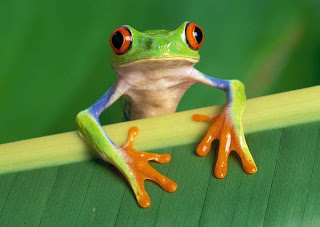
Mabel Katz read a story on her Ho'oponopono phone call a couple of nights ago -- and I was surprised to hear my name as she was speaking. It seems I had sent the tale to her nearly a year ago, and forgot having done so. That's how easily we can forget to clean. :-) Here's what Mabel read: Once upon a time there was a bunch of tiny frogs who arranged a climbing competition. The goal was to reach the top of a very high tower. A big crowd had gathered around the tower to see the race and cheer on the contestants. The race began. Honestly, no one in the crowd really believed that the tiny frogs would reach the top of the tower. You heard statements such as: "Oh, WAY too difficult!" "They will NEVER make it to the top." Or: "Not a chance that they will succeed. The tower is too high!" The tiny frogs began collapsing -- one by one except for those who in a fresh tempo, were climbing higher and higher. The crowd continued to yell, "It's too...

Taking Our Place in the Circle of Life: Remembering Who We Really Are

Image
Many viewing this picture will recognize Simba, the crown prince in the box-office hit, The Lion King . But during part of the film, Simba doesn't recognize himself. In fact, he forgets who he really is. This is one of the most poignant parts of the story, and maybe one we can all identify with. Simba is loveable, colorful, and often distracted from his path by others. I often forget who I really am, also. I don't mean in terms of impending Alzheimer's, but more in terms of forgetting my spiritual essence. I get lost in needing to be right, solving problems (trying to do it on my own, of course), and rehashing conflict rather than letting it go. The first lesson in Ho'oponopono is learning who we really are, though: a perfect creation of God. All is well with this until we start heaping tangled-up memories on top. In fact in Ho'oponopono, the main goal of life is to experience who we really are through taking 100% responsibility and cleaning with whatever data sho...

Ho'oponopono: A Chance to Un-do Our Collective Karmic Stew

Image
Timothy Freke's book, Shamanic Wisdomkeepers , contains a very valuable interview with Dr. Ihaleakala Hew Len. In it he discusses Hawaiian tradition and ways of understanding the world. Ho'oponopono is an ancient Hawaiian process of repentance, forgiveness, and transmutation that allows us to relate directly with the Light, or Divinity, that created us. No clergy, gurus, or other intermediaries are required. In one sense, this gives us great power to solve (or release) our own seeming problems, since it's all between us and Divinity anyway. At the same time, all of us are interconnected -- and we share a collective stew of "stuff". So although we can take 100% responsibility for our perceptions and experiences and work with Divinity to clear our erroneous memories, we also profoundly affect each other. What about these erroneous memories? How do they arise? "For the Hawaiians it's very simple," explains Dr. Hew Len. "In the beginning you were cr...

When Helping Hurts, and Ho'oponopono Sets Me Straight

Image
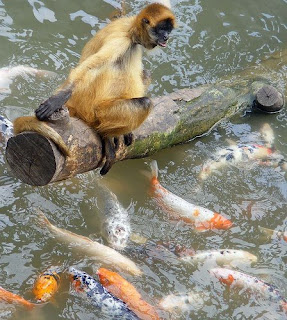
An A ncient Chinese Fable "A monkey and a fish were caught in a terrible flood and were being swept downsteam amidst torrents of water and debris. The monkey spied a branch from an overhanging tree, and pulled himself to safety from the swirling water. Then, wanting to help his friend the fish, he reached into the water and pulled the fish from the water onto the branch. The moral of the story is clear: Good intentions are not enough. If you want to help the fish, you must understand its nature." Many of us struggle with urges to "help" our family, friends, and others. If we work in healthcare, this is part of our everyday life. We think we're doing what's best for others. It's not that altruism is inherently wrong, but it can be confused with so many other things. Also, like the Chinese fable above, our conscious minds are clueless about the others' true natures. We interpret these according to our own skewed perceptions, rather than as they are. ...